In this digital age, where the world is at our fingertips, we have all been able to enjoy the latest perks of technology – be it in the world of social media, digital transactions, cool new gadgets, and the emerging field of AI. Amidst all these forms of engagement with technology, something else that is growing rapidly with it is – the breach of ethics and security risks.
As much as digitization invites innovation, it also invites vulnerabilities online. Due to this, it is increasingly important to stay updated with not just tools of innovation but practices to keep oneself safe online.
Core Dimensions of Online Security Covered:
- 1
Threat Landscape: Understanding where vulnerabilities arise from and identifying the various risk vectors circulating across local networks.
- 2
Legal Awareness: Navigating laws surrounding an individual’s right to freedom of expression and the fundamental right to digital privacy online.
- 3
Defensive Strategy: Practical familiarization with structural privacy utilities and tactical hygiene workflows to secure individual and organizational footprints.
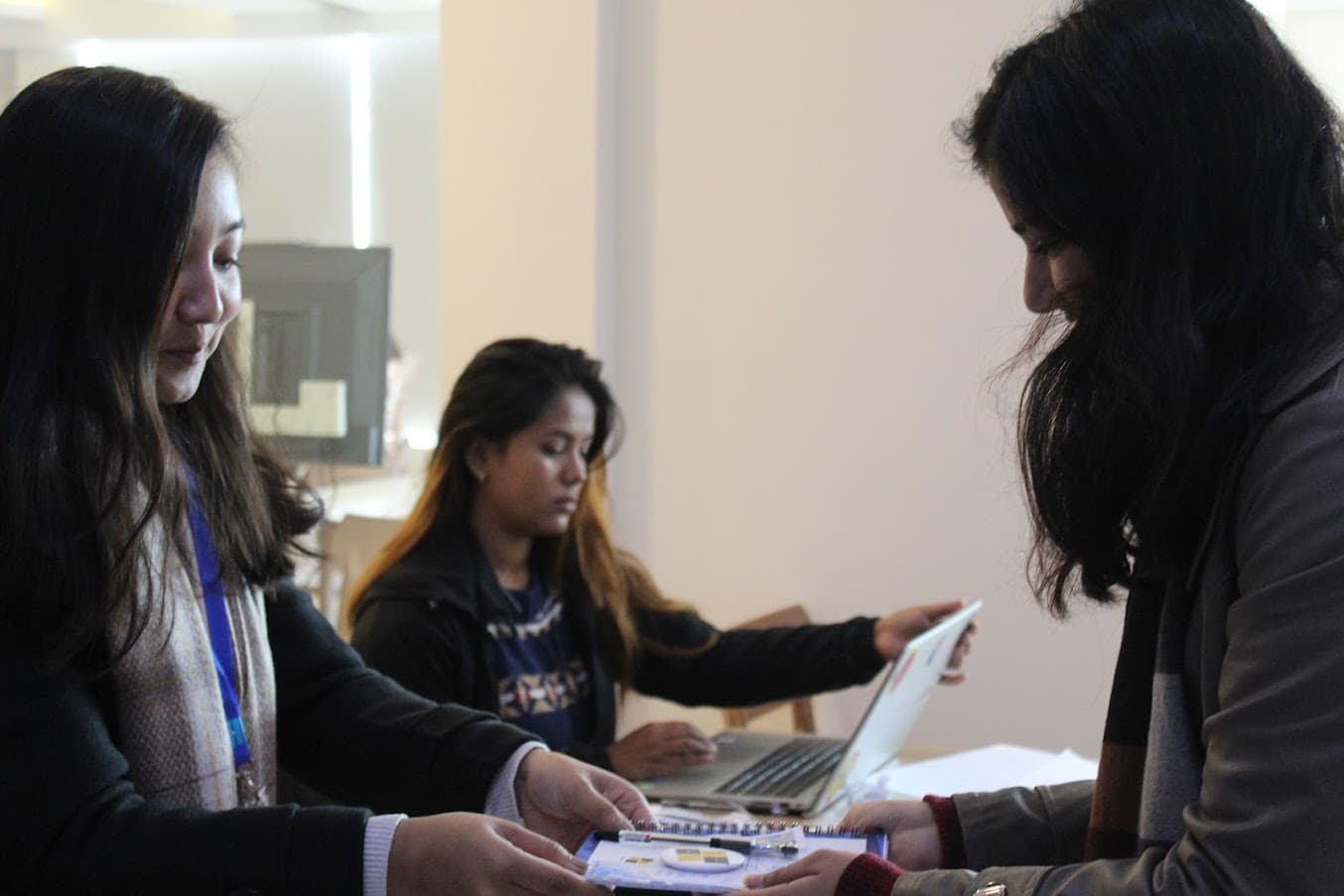
Surrounding these three significant pillars, the Safer-I campaign organized the comprehensive "Internet Ethics and Online Security Workshop" tailored specifically for young women computing professionals. The morning kicked off dynamically with registrations, collection of resources, and distribution of explicit Safer-I technical toolkits and merchandise.
Workshop Sessions Deep-Dive
1. Campaign Kickoff & Digital Hygiene Matrix
Facilitated by Nirisha Manandhar, Suvu Shrestha & Aayesha Shrestha
The setup sequence started off with an architectural layout introduction of the Safer-I roadmap led by Campaign Lead Nirisha Manandhar. Following this baseline alignment, Strategic Lead Suvu Shrestha and Tech Lead Aayesha Shrestha took over to drive an extensive session on structural data hygiene practices.
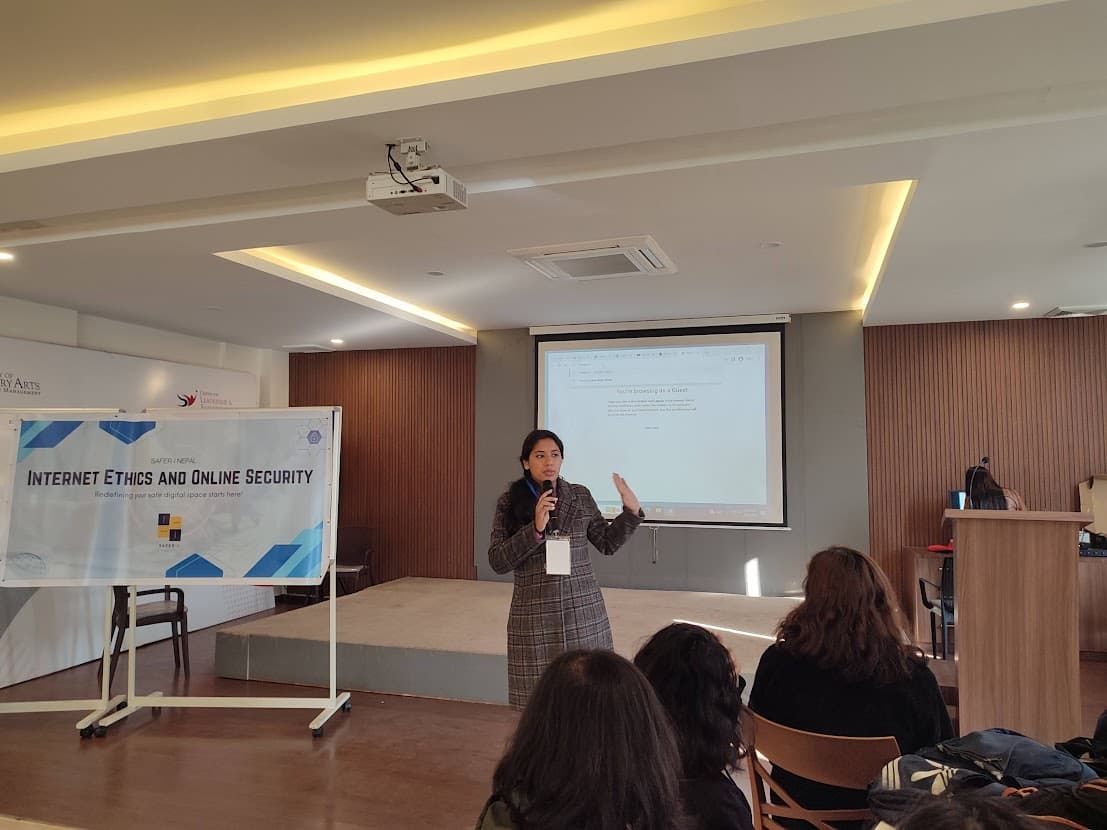
Nirisha Manandhar, the Campaign Lead, hosts the data privacy strategy kickoff
Participants were urged to aggressively evaluate their routine social sharing loops and map potential security liabilities. Additionally, the leadership team surfaced critical empirical snapshots extracted from their ongoing research initiative tracking "Data Privacy and Data Collection Concerns in Social Media Platforms Among Emerging Adults in Nepal."
2. Legal Protection Frameworks for Online Safety
Facilitated by Adv. Prapoosa KC (Attorney at Law)
The legal realities session focused entirely on legislative structures in Nepal covering cyber-violence and gender-focused legal remedies. Advocate Prapoosa KC delivered a realistic breakdown of existing legal frameworks, calling out systemic limitations, structural enforcement gaps, and bureaucratic pitfalls.
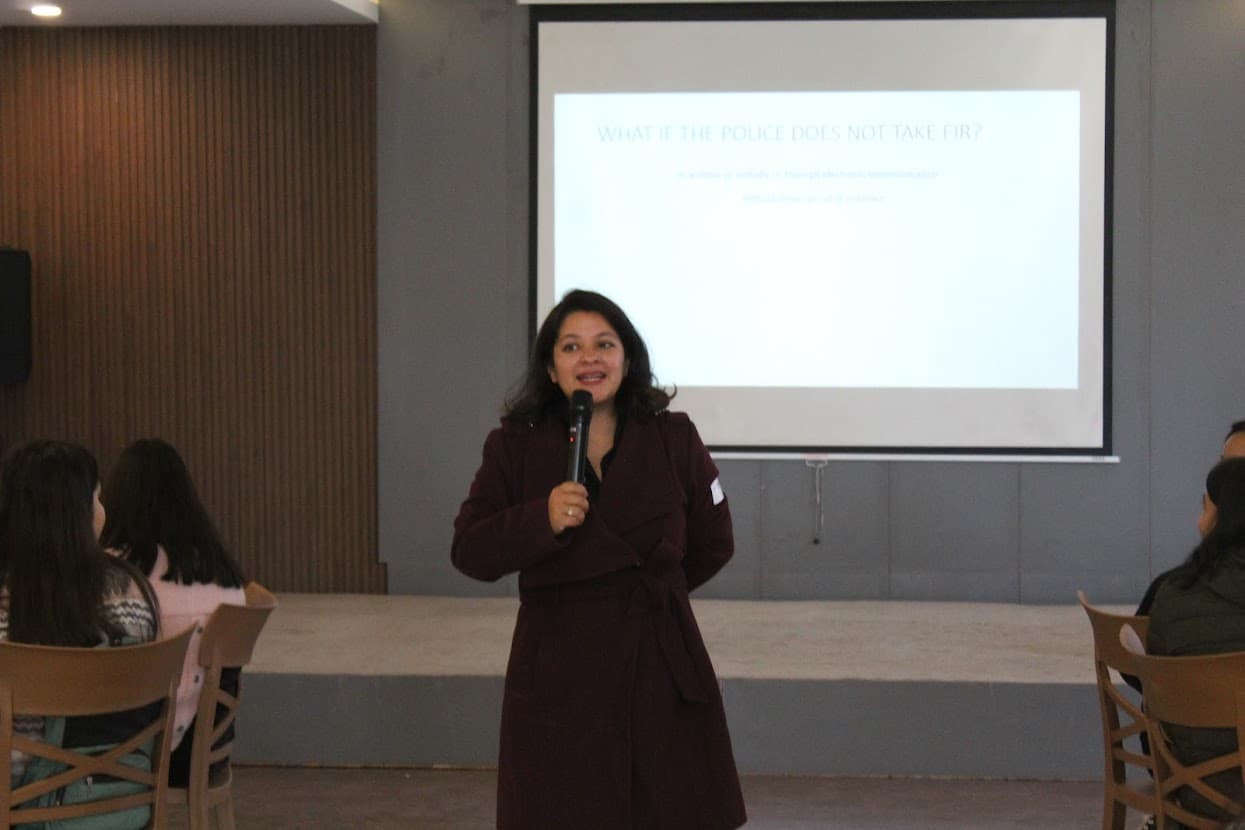
Adv. Prapoosa KC leads the critical session on ‘Legal Protection for Online Safety’
The track concluded with an open consultation, mapping legal defensive logic directly against participants' personal security scenarios.
3. Web Application Security Engineering
Facilitated by Suvrat Ram Joshi (Product Manager, John Snow Labs)
The final session shifted parameters into technical software execution layers. Led by seasoned enterprise cybersecurity veteran Suvrat Ram Joshi, the class verified entropy distributions inside password structures before jumping into actual web exploits.
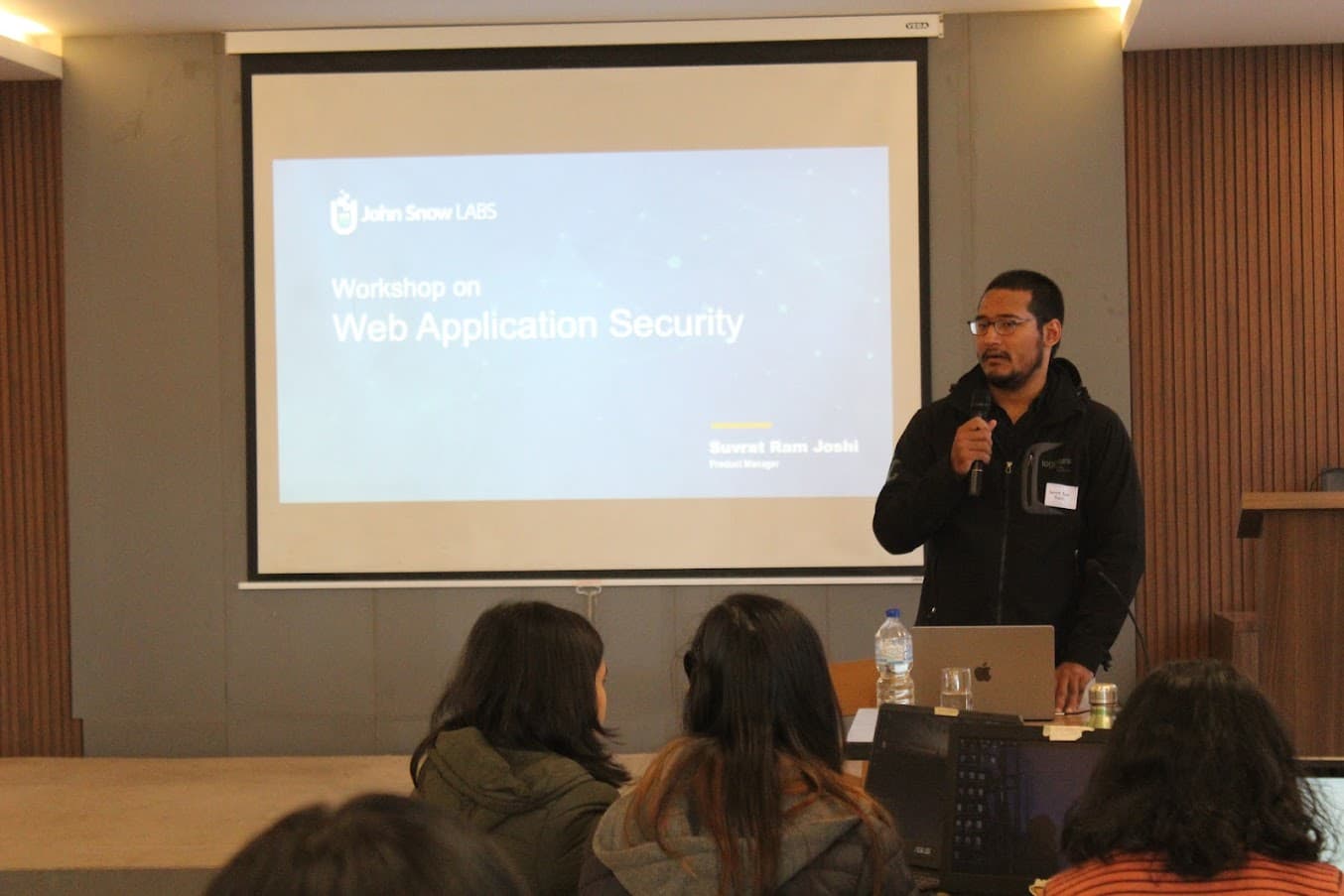
Mr. Suvrat Ram Joshi tracks complex technical vulnerability exercises with participants
A rigorous, completely hands-on lab approach was deployed to safely demystify and mitigate high-impact system attack profiles, explicitly tracking SQL Injections (SQLi), Click-jacking mechanics, and Cross-Site Scripting (XSS) anomalies.
Sustaining Collaborative Ecosystems
The day wrapped up with granular iteration reviews, feedback mapping metrics to inform future workshops, and cross-cohort networking modules between emerging tech talent and facilitators. The Safer-I ecosystem continues its mission to engineer safe, equal digital spaces across regions.
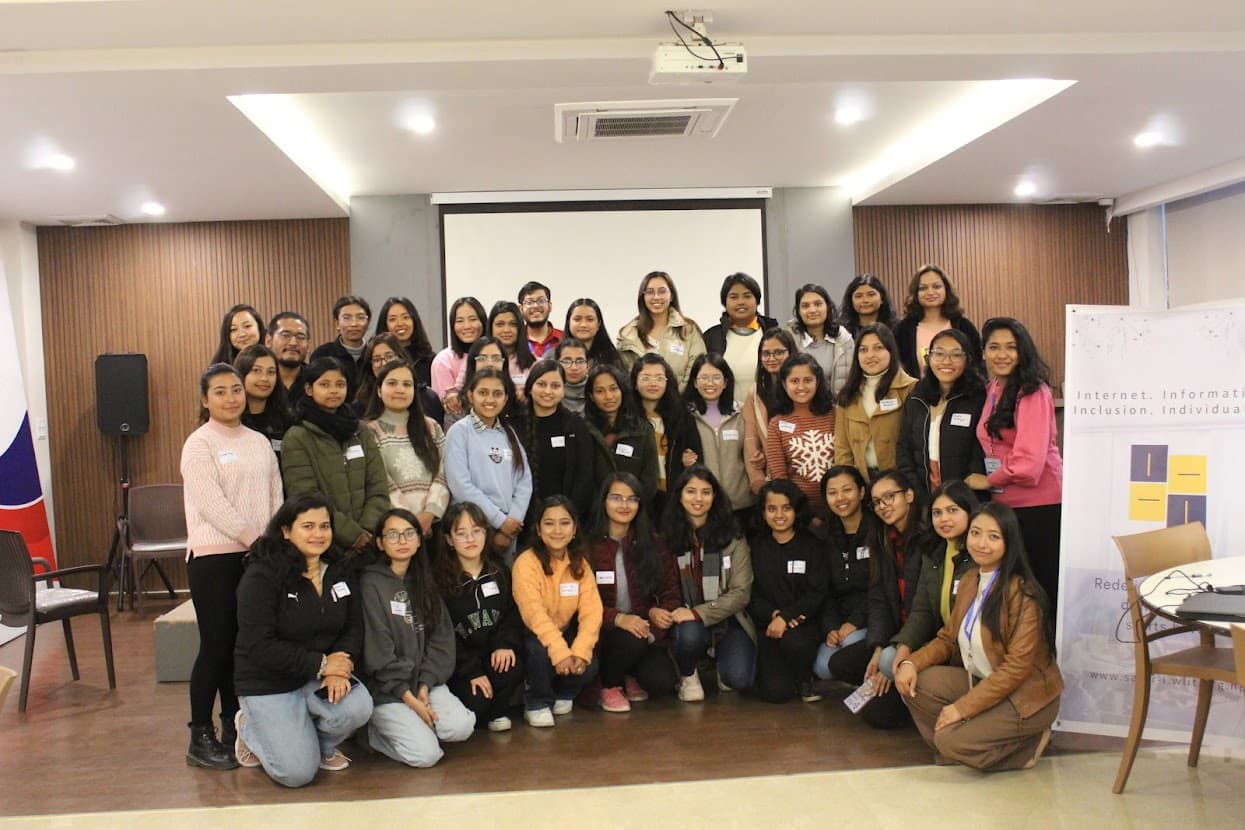
The participants and organizing Safer-I team coming together after a successful workshop